Weather on the Nullarbor
The weather conditions while crossing the Nullarbor can have a huge effect on how easy or hard the trip is. I've struck headwinds, tailwinds, thunderstorms, searing heat, cold nights and days where it has rained most of the day. Be prepared for everything,
Wind direction
The prevailing winds are east to west. If you leave from Perth, expect a headwind most of the year.
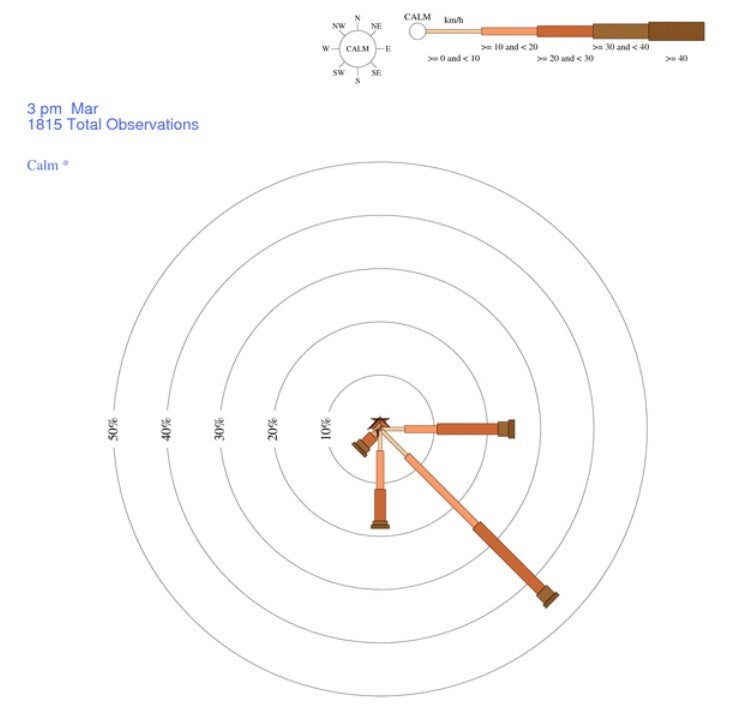
The Australian sub-tropical high is a series of very strong high pressure systems that are constantly crossing the continent. The high can cross quickly in a matter of days, but it can almost be stationary and take over a week to cross. This is the main meteorological feature that will dictate the wind for your journey. Wind roses are found at the Bureau of Meteorology page, showing the direction, strength and likely direction for set times and locations.
Most of the year, particularly summer and autumn, the high crosses down in the bight, bringing strong winds from the east. In winter, the high crosses the continent over land with tailwinds just as likely as headwinds.
This wind rose shows what to expect during afternoons in March. All my crossings have been in March and with the exception of stormfronts, only once have I had the luxury of a tailwind. When I have more time to tour, I'll be crossing at other times of the year.
Temperatures
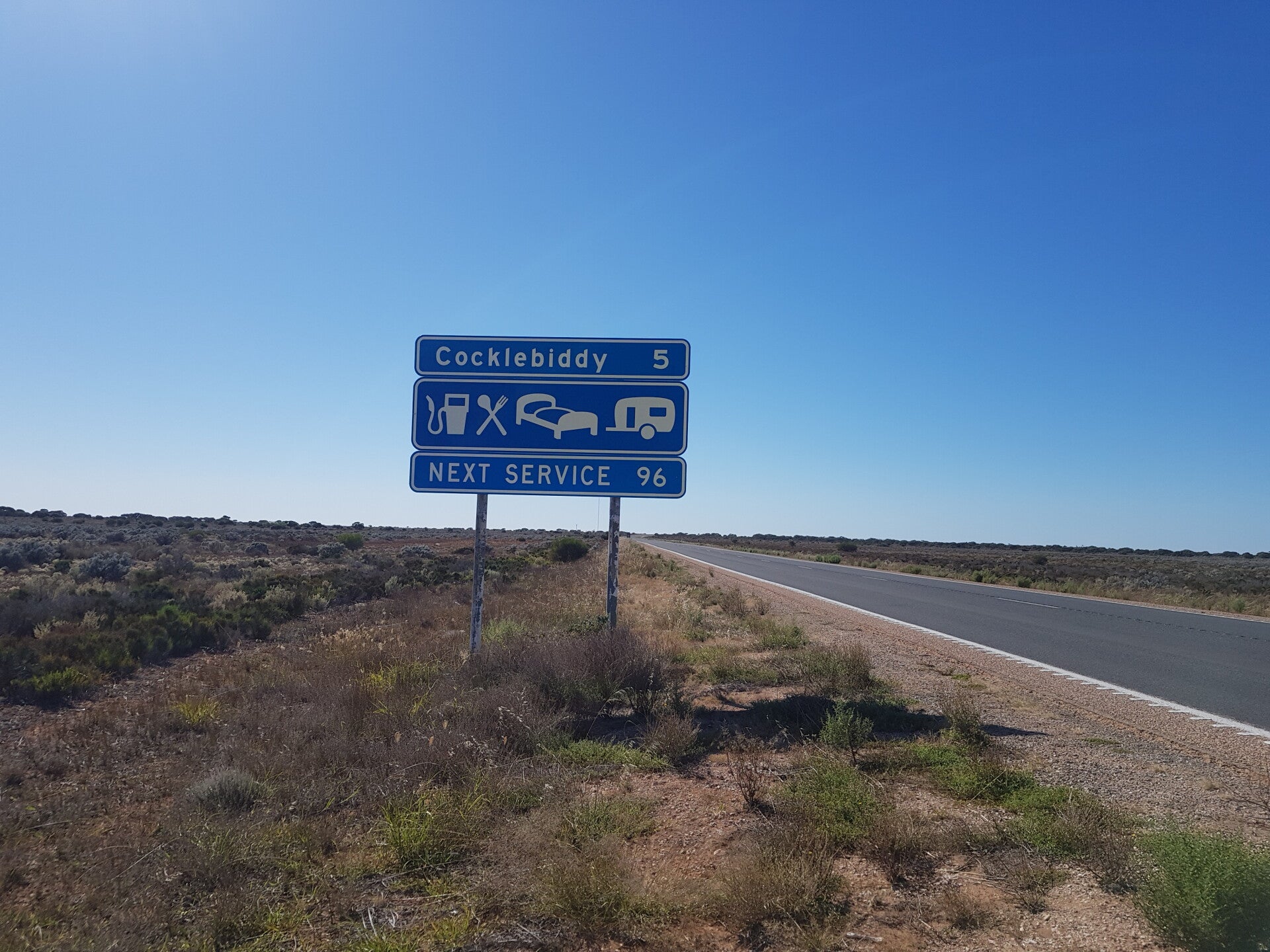
The Nullarbor is desert area and temperatures can exceed 40C in summer, although only 10 or so days per year. Temperatures in the 30s are common in summer. The name Nullarbor is Latin meaning no (Null) trees (Arbor). Although the highway barely scrapes the edge of the true Nullarbor, finding a shady tree to cool down is not an option for some parts of the trip. However, even sections outside the true Nullarbor can have very little shade available.
Knowing where the roadhouses and rest areas that can provide shade are located are important.
As there is little moisture in the air and the land loses it's heat quickly once the sun starts to set. Single digit temperatures overnight are not uncommon. Some riders crossing in winter that have woken up to find ice on their tents. Be prepared for the nights to get cool quickly.
Rain / storms
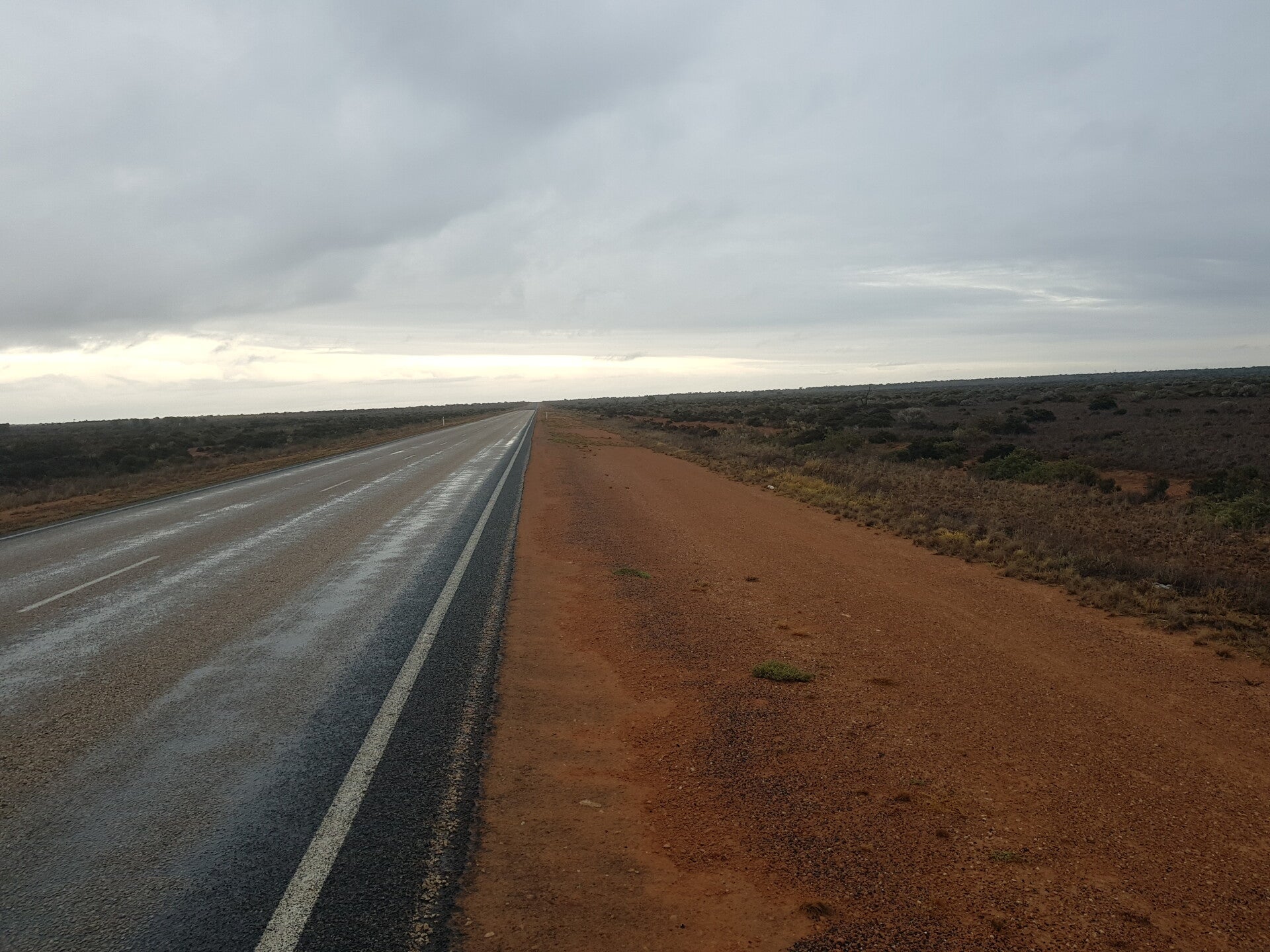
While the wind generally comes from the East, the storm cells often come from the west. In the 5 times cycling across the Nullarbor I've had to dodge severe storm cells with lightning twice and had a steady persistent soaking rain once. This may be unique to the March/April period, but rainfall across the Nullarbor appears reasonably consistent over the year without huge seasonal variations.
Sun
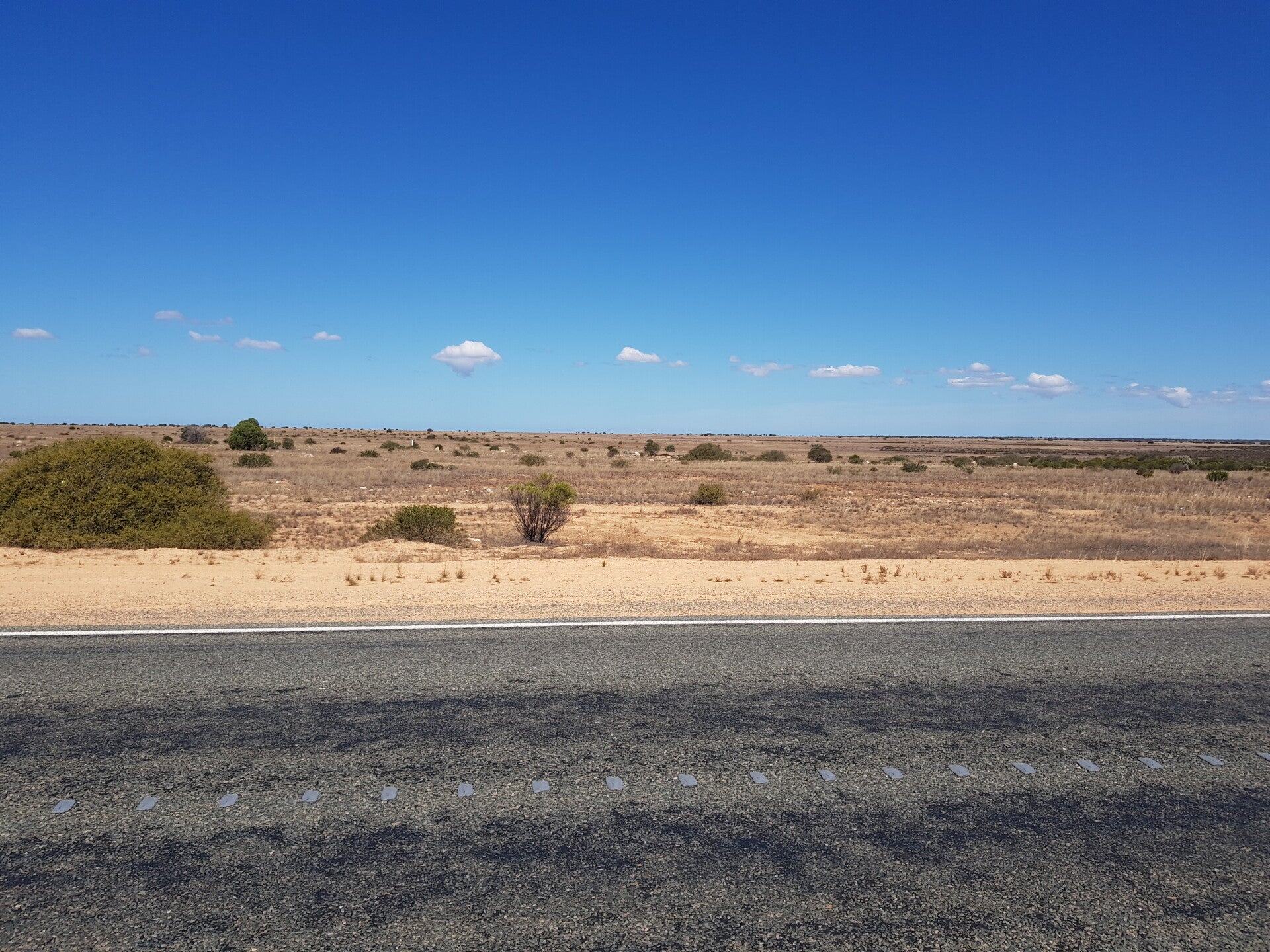
The Australian sun is harsh. Unfortunately Australia's reputation as the country with the highest incidence of skin cancer is deserved. Where possible, keep your skin covered. Where you can't cover your skin, apply sunscreen. Don't just apply sunscreen once at the start of the day and think that will do. ,Re-apply throughout the day to ensure you remain protected. A long-brim cap under the helmet, a legionnaires hat with neck protection, a helmet bring or face buff are options to protect the face.